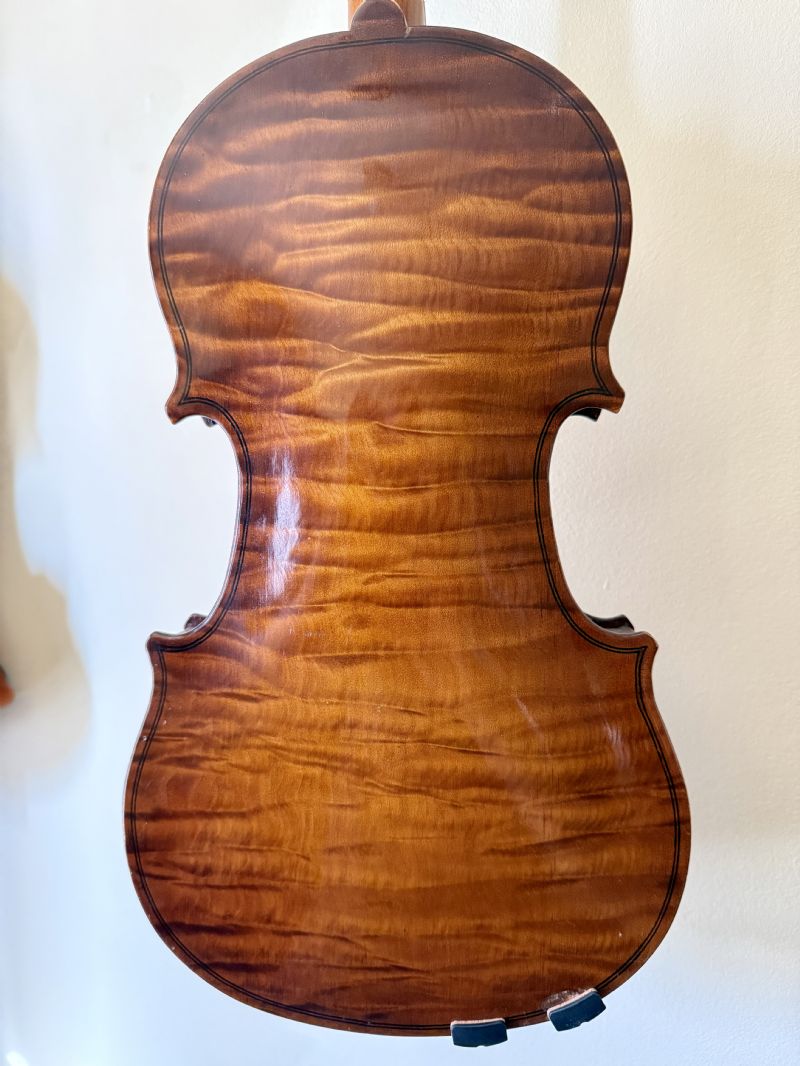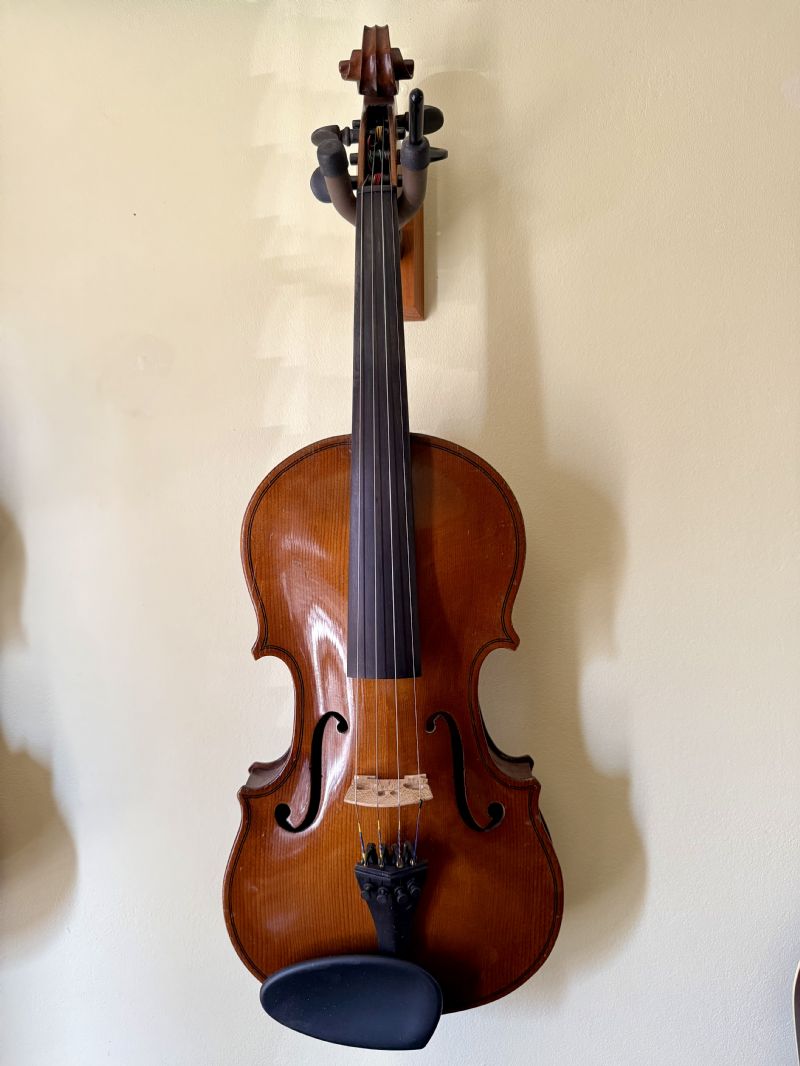



Interesting. I have a mid 30's Kalamazoo KG-14, sunburst. Fun to play.
But didn't know they made violins too.


That's a Gibson violin - they didn't make too many, but they're usually pretty nice. Lovely back on that one. "Kalamazoo" was a name they used for a cheaper line of fretted instruments, but I didn't know they used it for violins.
Joe Birchfield, of the Roan Mountain Hilltoppers, told me he'd once had a Gibson violin which he sold in the 1940's to Leslie Keith, the "composer" of "Black Mountain Blues." Who knows, maybe he used it on his first recordings of the tune.
Edited by - DougD on 12/13/2025 15:44:45
quote:
Originally posted by DougDThat's a Gibson violin - they didn't make too many, but they're usually pretty nice. Lovely back on that one. "Kalamazoo" was a name they used for a cheaper line of fretted instruments, but I didn't know they used it for violins.
Joe Birchfield, of the Roan Mountain Hilltoppers, told me he'd once had a Gibson violin which he sold in the 1940's to Leslie Keith, the "composer" of "Black Mountain Blues." Who knows, maybe he used it on his first recordings of the tune.
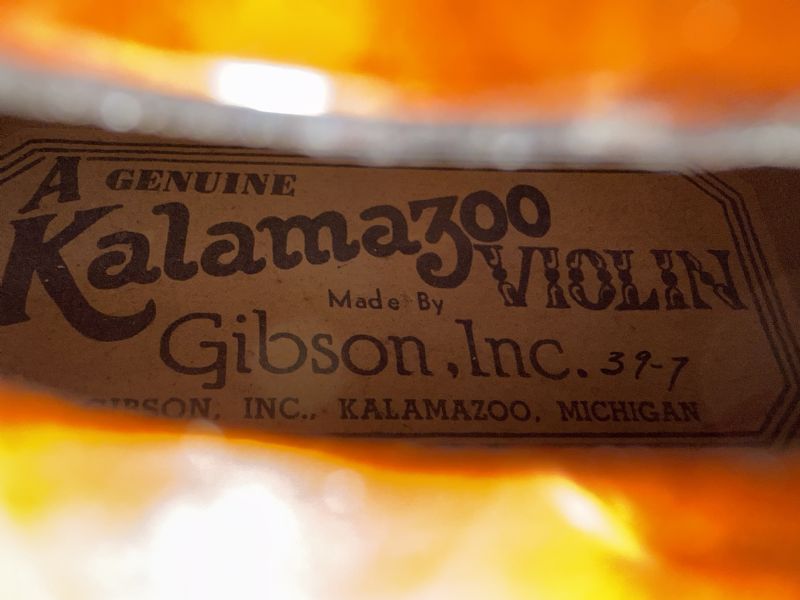
Made me go looking - because I had heard that Gibson made violins. I knew someone who said they had one. But from what I am reading they used a label inside that matches the above photo. They were marketed as "Gibson instruments" made in their shop in Kalamazoon, MI. According to what I am reading, they made orchestral instruments between 1939 and 1942 - to fill the market during WWII. They were Discontinued after the war.
"VA50 and V-27 series" were made from maple with spruce tops. Unlike the guitars and mandolins that were made as budget instruments, the orchestral instruments were not "budget" made. The label was to emphasize the factory origin.
(edit - I have no idea how the picture of the moose got attached. It's mine, from our back yard in Alaska. But I didn't knowingly attach it, and can't seem to delete it. hmmm)
Edited by - tonyelder on 12/13/2025 16:25:38
quote:
Originally posted by tonyelderquote:
Originally posted by DougDThat's a Gibson violin - they didn't make too many, but they're usually pretty nice. Lovely back on that one. "Kalamazoo" was a name they used for a cheaper line of fretted instruments, but I didn't know they used it for violins.
Joe Birchfield, of the Roan Mountain Hilltoppers, told me he'd once had a Gibson violin which he sold in the 1940's to Leslie Keith, the "composer" of "Black Mountain Blues." Who knows, maybe he used it on his first recordings of the tune.Made me go looking - because I had heard that Gibson made violins. I knew someone who said they had one. But from what I am reading they used a label inside that matches the above photo. They were marketed as "Gibson instruments" made in their shop in Kalamazoon, MI. According to what I am reading, they made orchestral instruments between 1939 and 1942 - to fill the market during WWII. They were Discontinued after the war.
"VA50 and V-27 series" were made from maple with spruce tops. Unlike the guitars and mandolins that were made as budget instruments, the orchestral instruments were not "budget" made. The label was to emphasize the factory origin.
(edit - I have no idea how the picture of the moose got attached. It's mine, from our back yard in Alaska. But I didn't knowingly attach it, and can't seem to delete it. hmmm)
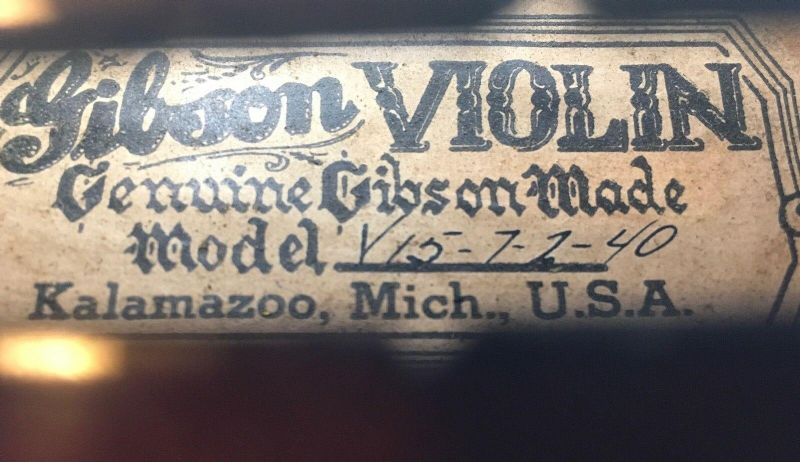
Thanks for the post! The Gibson violins had different labels that had a line for the model to be written in. There's a lot of info about those to be had. There was a lot less of these Kalamazoo violins produced and the info seems to be scarce.
Edited by - greenhorn on 12/14/2025 19:55:32
Gibson tried to get into the violin market in that era because there was so much demand for violins and they wanted to have a wider range of instruments to offer buyers. Conn tried the same thing for a while. Unfortunately, the Gibson instruments were not made particularly well, and although the wood in the backs could sometimes be pretty, the workmanship was overall somewhat crude and they didn’t earn a very good reputation as playing instruments.
Before WWII, the violin making powerhouse of the world was Markneukirchen, and Gibson saw what was happening with the advent of the war and hoped to capitalize on the regional destabilization and establish a new violin production center. The problem was that the quality was never high enough to compete with Markneukirchen, so the violin making enterprise was abandoned in 1941. After the war, a new German center was established in Bubenreuth, and while the quality was only a shadow of what came from Markneukirchen, it was still the most reliable source for student quality instruments for a long time. In the U.S., the idea of a violin factory was abandoned after the war and far more people became interested in making their own instruments with the growth of DIY projects. There have been several attempts to get a violin manufacturing business underway, but nothing has really materialized for long. A number of shops have employed makers in house, but that tends to be more of a high-end market and it’s limited in output. Even the factories that use CNC machinery do so in other parts of the world because labor is cheaper and they can avoid restrictions.
It’s ironic that Orville Gibson built his company on the concept of applying violin technology to plucked string instruments but couldn’t make any headway with actual violins. There’s speculation that Orville made a few violins himself, but I haven’t seen any examples.
Gibson violins appear from time to time and they’re usually inexpensive because the demand for them is low. They’ve become more of a novelty item because of the name association.
Pretty backside for sure!
I read that Orville Gibson made five violins. And they were pretty good by all accounts.
quote:
Originally posted by martyjoeI read that Orville Gibson made five violins. And they were pretty good by all accounts.
I've come across a claim that up to six were made and one was presented to Jan Kubelik, but there doesn't seem to be any tangible evidence to back it up. I'd be interested to see pictures of an authenticated example.
As for the factory violins, I've read that Gibson tried to get into violins in the 1920s and worked on a deal with the Virzis though Lloyd Loar to begin a production line, but this all fell through when Loar quit. At the time the mandolin orchestra was dying out and it was getting more and more difficult to sell mandolin, so Loar was looking for Greene pastures and took the Virzi contact with him. This was embarrassing for Gibson because they'd announced the deal publicly.
When they eventually did start making violins, they had to rely on much less impressive means because labor was so expensive compared to the European industry. To save costs, the necks and scrolls were cut by machinery by subcontract in Michigan and the existing machinery for plucked instruments was used to machine the plates. Once the rough work was done, the parts were sanded to smooth out machine marks. Then they were spray varnished with lacquer.
Edited by - The Violin Beautiful on 12/16/2025 05:25:46
Terms of Use | Privacy Policy | Privacy Consent (EU/GDPR Only)
Copyright 2026 Fiddle Hangout. All Rights Reserved.