


Freestyle Fiddler Darol Anger here ...Thought I'd weigh in with some news and as much information as I can contribute on duets.
Two fiddles playing together is nothing new: it’s been a staple of social music for as long as there have been bowed instruments. What is new is that the range of possible textures for American fiddling has been expanded in the last 40 or so years. Rhythmic patterns and sounds have caught up with the rest of American culture and the harmonic range of improvised fiddling has been somewhat widened along with the general widening of harmonic possibilities in modern music. One of the most effective rhythmic models for fiddling has simply been active and dense melodies, played with powerful 16th-note flow. That’s been around forever in folk fiddling, from Celtic unisons to Cajun parallel octaves to loose but intense probability waves in Appalachian styles.
We’ve seen the two-melody (straight harmony or counterpoint) model, one melody with regular 8th note accompaniment, and more recently, accompaniment models based on fiddle imitating other instruments such as drums, banjo, or strummed guitar. The chop, Richard Greene’s far-reaching innovation, has opened up new vistas for fiddlers and created new challenges.
For myself, the experience in middle and high school of playing last chair 2nd violin in the orchestra was more useful than I realized at the time. I was seldom playing anything like a melody; usually a harmony note or a rhythmic figure ideally supporting the main melodists just a few feet away in any direction. That helped my subsequent absorption into the world of Bluegrass, where the fiddle is called upon to play many roles within the same tune: lead melody, counterlines, and rhythms, all with a precise groove that can’t deviate from the rest of the band, and a high intonational standard. However, I was already ruined for the pursuit of any “pure” style, because of my exposure to various jazz and pop music of the sixties, in particular the Beatles, who were master eclecticists and extremely exploratory in their music. So when I had the opportunity to create a comprehensive fiddle style that could function well within another acoustic string band genre, I took it with gusto, though it took longer than I expected— all my life, in fact. Still working on it. Of course I’m speaking of the David Grisman Quintet, where I had extraordinary freedom to create a musical vocabulary based on everything I was hearing in Bluegrass, jazz, blues, and most of the pop music that had gone on since the early 20’s in the US and Latin America. My work in the Turtle Island String Quartet further expanded my range of textures, where we had to convincingly reproduce the groove and general textures of jazz and some fusion music, as well as David Balakrishnan’s original compositions which often combined jazz harmony with South Indian modes.
So when the time came to make a recording of all duets with other fiddlers, I was so darn ready.
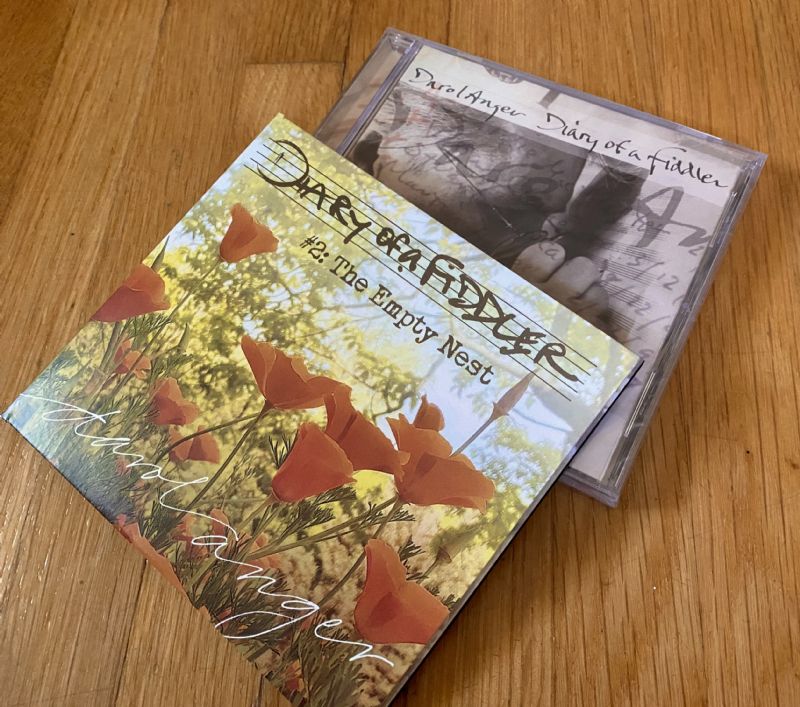
The first volume, Diary Of A Fiddler, produced for Compass Records in 1999, featured myself, Darol, accompanying a wide range of brilliant contemporary fiddlers in many of the styles which were exploding into popularity at the turn of the new century, and demonstrating fiddling’s deep relevance to just about every style of music. The stripped-down duet format enabled the Darol Anger Action Figure and his chosen duet partners, among them Stuart Duncan, Natalie MacMaster, Martin Hayes, Bruce Molsky, Vassar Clements and Alasdair Fraser, to demonstrate a set of musical and fiddling skills that might have been unfamiliar to much of the music world prior to this release. But these ideas were bubbling away as an upsurge of interest in fiddling among young people took hold of the world. This phenomenal bloom of talent shows no signs of slowing down and is largely attributable to the ongoing effect of fiddle camps created by Jay Ungar, Alasdair Fraser, Mark O’Connor and others, which sparked Diary #1. These camps are where I met and established a playing rapport with all these other fiddlers.
This widening-of-styles trend has been amplified by the recent surge of Western European style-trained string players into improvisational and social music. The fiddlers, who have been making stuff up since time began, are out in front here, but the need to have music feel good as human interaction on many levels has led to a great rebalancing and sharing of all styles of string playing. Now we have great vernacular string programs in colleges such as Berklee, Colorado State and the New England Conservatory, and many more fiddle camps than there are weeks in the year.
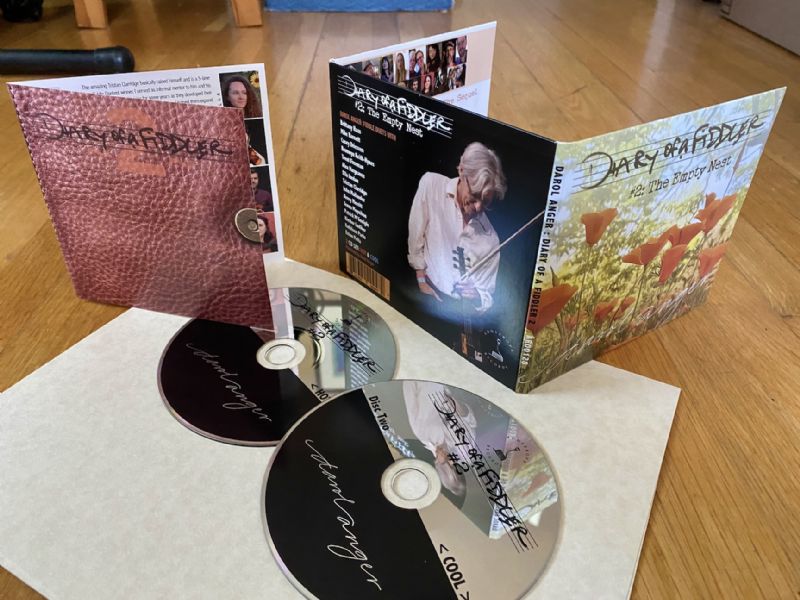
So if Diary #1 was an expression of the recent coalescing of an international multi-stylistic fiddling community, Diary Of A Fiddler # 2 is a celebration of my particular connection to that community and a shared musical ethos within the acoustic string world.
This second volume, made some 25 years after the first, celebrates the brilliance at least 3 generations of spectacularly skilled fiddlers with whom I’ve been privileged to work. Each of my duet partners in Diary #2 is a former student or someone with whom I have worked at some level of mentorship, whether a shorter or longer period. I feel a deep connection and admiration for all of the players on this recording. In every instructional situation, my prime directive has been not to encourage copying or to cultivate a particular style but to amplify the joy of music and encourage deep, joyful engagement with the physical-emotional act of music-making, and especially, improvising together.
With a limited palette of just two and occasionally three bowed instruments, it’s even more important to
Even though for Diary #2 we stuck to playing my original tunes, I was able to choose a variety of styles and grooves which tend to showcase each individual player’s special talents. For example, with Brittany Haas, we wound up playing a rock-inspired piece which shows off her almost unbelievable rhythmic intensity, and some very free yet highly orchestrated lines that show off our years of playing together. With the virtuosic Avery Merritt, we ripped on my Uber-Grass piece ”Coal Burnin’ Grease Fire”, whose title pretty much says everything. My duet with Casey Driessen features a very slow-burn groovin’ R&B tempo with tight counterpoint and chopping as befits Caseys’ extraordinary abilities in that area. Jazz and Eastern European violin specialist Enion Pelta picked one of my faux-middle-eastern melodic lines, Ouditarus Rez, to create a roaring, fantastically creative landscape of textures. West Coast Vibe and mind-meld specialist Tristan Clarridge also happens to be a 5-time Interplanetary Fiddle Contest winner, and we were able to play a beautiful simple Canadian-sounding tune and leave the wheel numerous times to explore the beauty of simple modal counterpoint.
Each of the two volumes feature duets with many great fiddlers and one large ensemble piece.
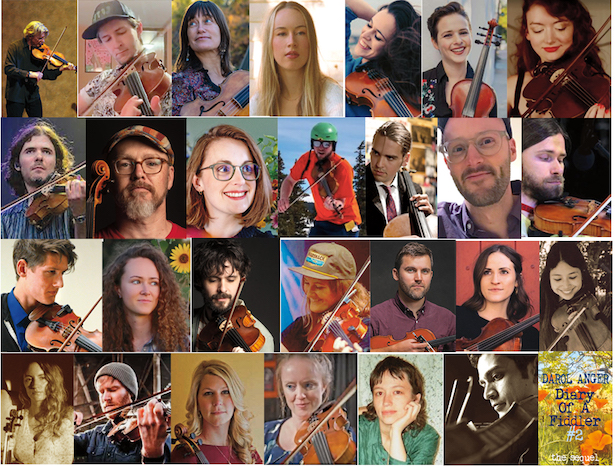
In Volume 1, the unique all-fiddle ensemble consisted of Vassar Clements, Stuart Duncan, John Hartford, Sam Bush, Tim O’Brien, Matt Glaser and myself, playing the traditional tune “John Henry.” In Volume 2, the large ensemble consists of 22 fiddlers, all of whom I’m connected to in some sort of inspirational way. During the isolating days of the 2020 Pandemic, I hit upon the idea of having each fiddler improvise remotely on a track I created at home, the traditional ”Liza Jane’, in New Orleans Second-Line style. Because each person had to record their part one at a time, it seemed unfair to the later overdubbers who might feel like they had less options because of an ever more-crowded sound field. Therefore, each fiddler only played to my original track! There was an arrangement, and everyone knew the general plan and chord changes. They were all individually invited to express themselves freely within those parameters. That list includes many of the tremendous young fiddle players who have illuminated my life. The result is astonishing, uplifting, hilarious, and absolutely hair-raising.
The first single, I Coulda Told You, with Brittany Haas, is streaming all over the place as of July 28, 2025.
Here's a link to the band camp page where you can get this whole damn recording.
darolanger1.bandcamp.com/album...mpty-nest

Terms of Use | Privacy Policy | Privacy Consent (EU/GDPR Only)
Copyright 2026 Fiddle Hangout. All Rights Reserved.